Temple · Vrindavan
Shri Rangji Mandir (Sri Ranganatha)
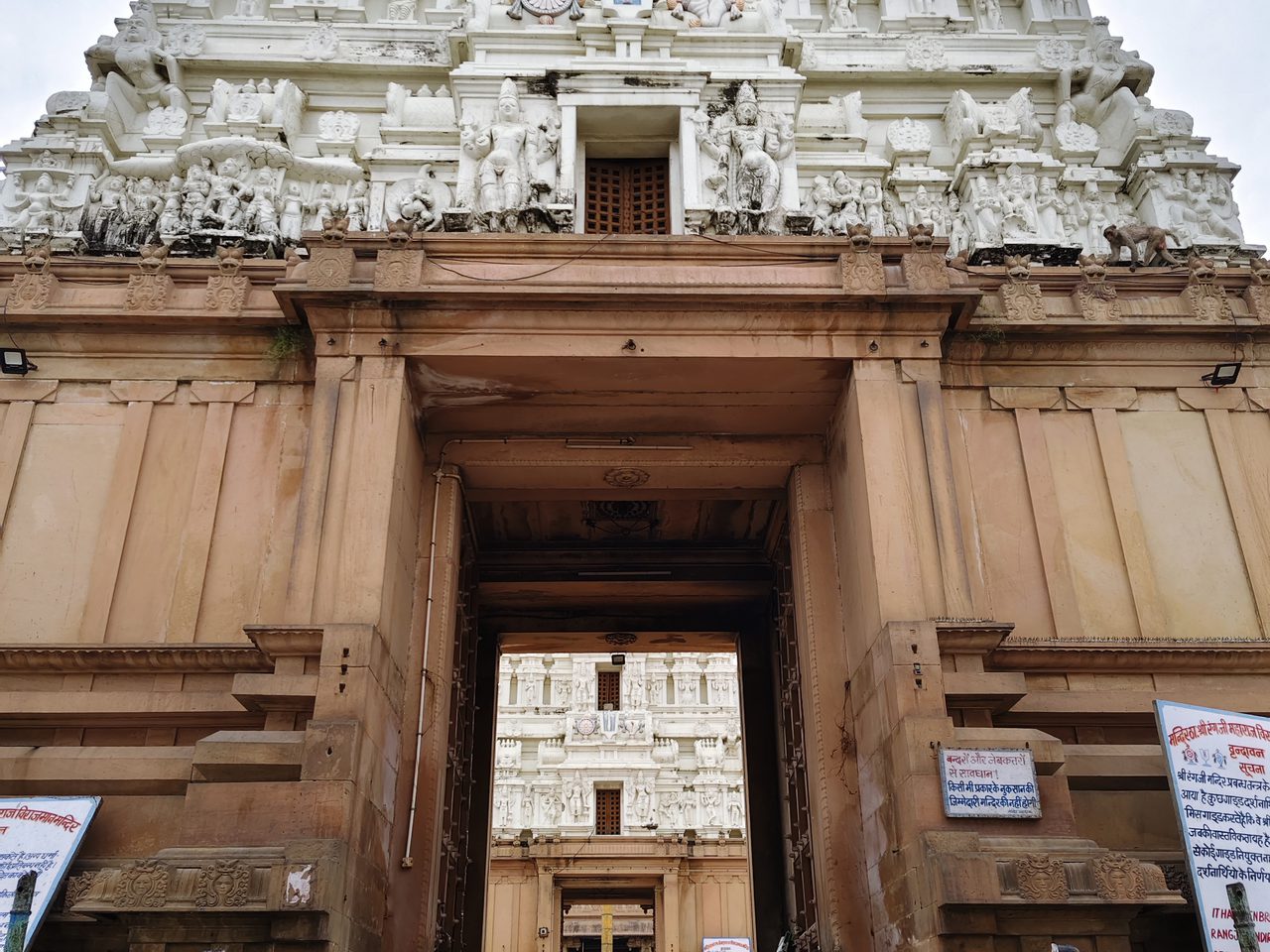
A piece of Tamil Nadu in Braj — gopuram, gold pillar, walled gardens, and the biggest temple compound in Vrindavan.
The gopuram over the inner gate — photo by Aliva Sahoo, CC BY-SA 3.0, via Wikimedia Commons (cropped)
- Town
- Vrindavan
- Deity
- Ranganatha (Vishnu reclining on the serpent Shesha)
- Origins
- Built 1845–1851 by the Seth family of Mathura in the Sri Vaishnava tradition
- Summer hours
- Roughly 6:00 am–11:00 am and 4:00–8:30 pm
- Winter hours
- Roughly 6:30 am–11:00 am and 4:00–8:00 pm
- Entry
- Free (small fee for the temple's museum/garden sections when open)
- Dress code
- Conservative; traditional dress is appreciated in this orthodox compound. Shoulders and knees covered, minimum.
- Photography
- Permitted in the outer compound and gardens; restricted as you approach the sanctum. Follow the priests' guidance.
About the hours: Closes through the middle of the day more strictly than most Vrindavan temples — plan around the midday break.
Overview
Walk east from Govind Dev and the skyline changes country: a carved gopuram lifts over the rooftops, a gilded pillar catches the sun behind a sandstone gate, and a walled compound the size of a village opens around a temple built to the rites of Tamil Nadu. Rangji is Vrindavan’s largest temple and its most unexpected — a full Sri Vaishnava world transplanted whole into Braj.
History
The temple was raised between 1845 and 1851 by the Seths of Mathura — among the richest merchant families of northern India — under the guidance of their South Indian acharya. They built without compromise: Dravidian plan, six-storey gopuram, pillared halls, a sacred tank, gardens, and a gilded dhwaja stambha before the sanctum. Priests trained in the southern tradition were settled here, and the worship of Ranganatha — Vishnu reclining on the serpent Shesha, the presiding form of Srirangam — has run on Tamil liturgy ever since.
Spiritual significance
Rangji joins the two great Vaishnava geographies of India in one compound: the Krishna-soaked land of Braj and the Vishnu of the southern delta. For the Sri Vaishnava tradition of Ramanuja it is the honored northern seat; for Vrindavan it is a daily reminder that the town’s pull reaches every school of devotion. Krishna is present here too — the tradition reads Ranganatha and the lord of Braj as one — but the idiom, from the priests’ dress to the sanctum’s Tamil hymns, is the south’s.
Visiting well
- Mind the midday closing — Rangji keeps stricter hours than its neighbors; morning is best.
- Walk the full outer courtyard: the long processional avenue explains the Brahmotsav the moment you see it.
- Non-Hindu visitors should watch for the sanctum boundary signs; everything up to them — gopuram, pillar, gardens — is open and unhurried.
- Combine with Govind Dev for back-to-back architectural wonders, sixteenth century and nineteenth.
Festivals here
The Brahmotsav (Rath ka Mela) each March–April is the temple’s great event: ten days of processions on garuda, horse, elephant, and palanquin vahanas, ending with the huge wooden chariot hauled down the courtyard by crowds. Janmashtami and the spring Holi season are also kept, in the temple’s own southern manner — quieter than the Braj mainstream, and the more striking for it.
While you're here
Around Shri Rangji Mandir (Sri Ranganatha)
Nearby attractions
- Govind Dev Mandir
- The 1590 red sandstone masterpiece stands a few minutes west — visit the two great buildings together.
- Vrindavan's main bazaar road
- The temple's long outer wall runs along the old Mathura road, with the town unfolding north of it.
Eating & staying nearby
- Bazaar-road eateries
- Thali houses and sweet shops line the main road outside the compound; the temple area itself stays quiet.
- Where to stay
- Several mid-range hotels and guesthouses cluster along the main road nearby — convenient, and calmer than the Banke Bihari quarter. See the accommodation guide.
Festivals celebrated here:
Questions
Asked often.
- Why is there a South Indian temple in Vrindavan?
- It was built in the 1840s by the Seths of Mathura, wealthy merchant devotees guided by a South Indian acharya, as a full Sri Vaishnava temple — Dravidian architecture, Tamil liturgy, southern priests and all. It remains the tradition's great northern outpost.
- Can non-Hindus enter Rangji temple?
- The outer compound, gateways, and gardens are open to all; the inner sanctum area is reserved for Hindus, and the boundary is signposted. Respect it and you will be welcomed everywhere else.
- What is the golden pillar?
- The dhwaja stambha — a gilded column some fifty feet tall standing before the sanctum, one of the temple's signatures. Its plating and the compound's scale were the Seths' statement that nothing in the south outdid their devotion.
- What is the Rath ka Mela?
- The temple's ten-day Brahmotsav each spring (March–April), when the deity processes daily through the compound's long courtyard on different vahanas — culminating in an enormous wooden chariot pulled by devotees. It is Vrindavan's biggest festival that most outsiders have never heard of.
Visiting?
Planning a trip around Vrindavan?
Hourly, independent trip-planning help from a local — itineraries, bookings in your name, no commissions. The introduction is free.
amit@brajbhoomi.com