Temple · Barsana
Shri Radha Rani Mandir (Shriji Temple)
Radha's hilltop palace — two hundred steps up, the best view in Braj, and the throne of Lathmar Holi.
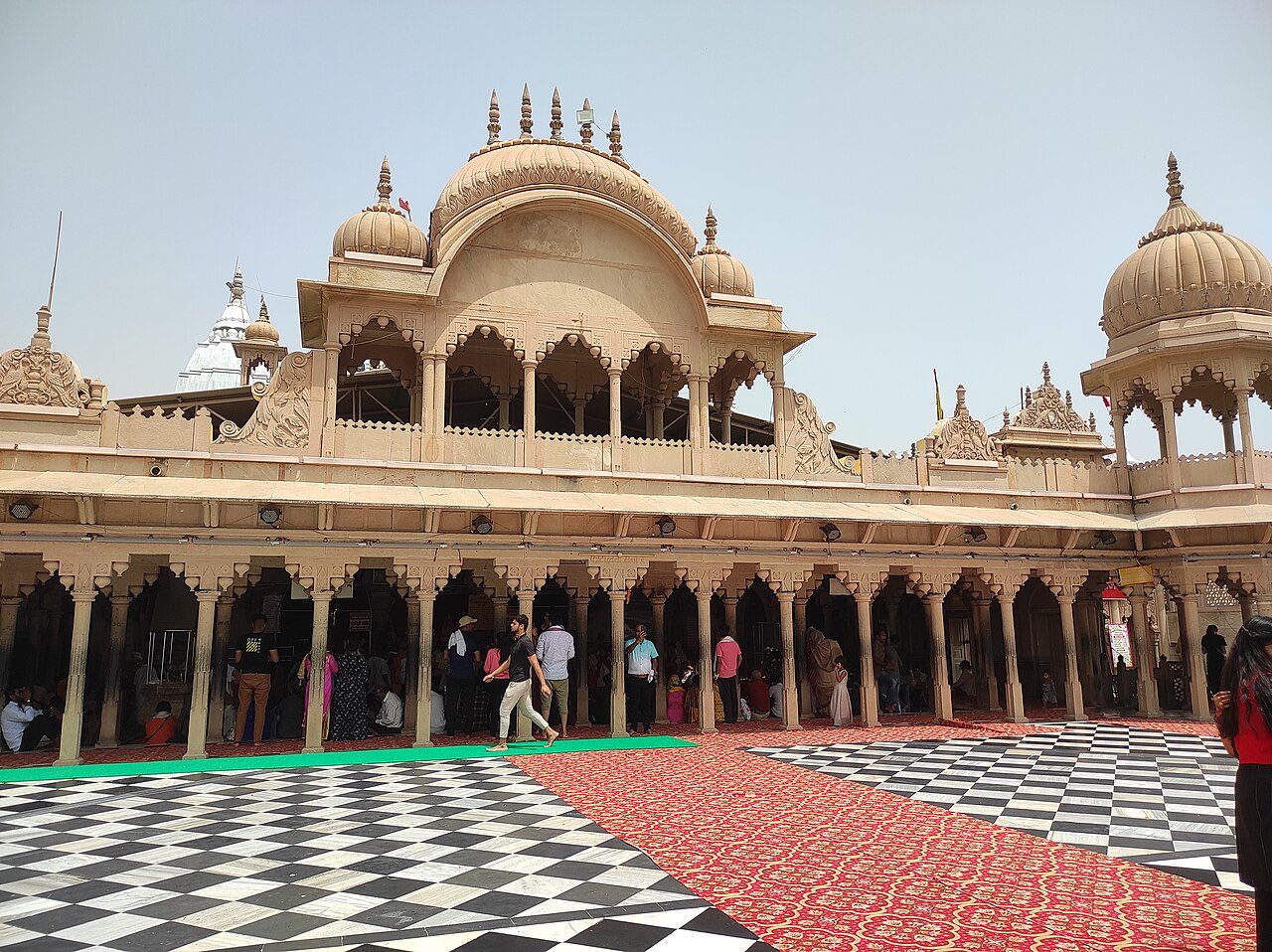
The hilltop courtyard of Shriji — photo by Kridha20, CC BY-SA 4.0, via Wikimedia Commons
- Town
- Barsana
- Deity
- Radha Rani, the queen of Braj
- Origins
- Site sanctified for centuries; principal structure raised in the 17th–19th centuries
- Summer hours
- Roughly 5:00 am–12:00 pm and 4:00–9:00 pm
- Winter hours
- Roughly 5:30 am–12:00 pm and 4:00–8:30 pm
- Entry
- Free
- Dress code
- Modest — shoulders and knees covered. The climb in summer argues for light cotton and an early start.
- Photography
- Courtyard and views generally tolerated; avoid photographing the deity and follow posted signs.
About the hours: Hours flex with season and festivals; during Lathmar Holi and Radhashtami the whole hill runs on festival time.
Overview
Radha’s temple stands where a queen’s palace should: on top of the hill, above her town, with the whole of Braj spread out below. The Shriji Mandir — red and gold sandstone, Mughal-inflected arches, courtyards catching the wind — is the seat of Radha Rani, and in this land that is the senior throne. Vrindavan may be Krishna’s playground, but every greeting exchanged across Braj — “Radhe Radhe” — acknowledges who reigns here.
History
Barsana is the town of Vrishabhanu, Radha’s father, and its hill has borne her shrines for as long as records reach. The present temple complex took shape between the 17th and 19th centuries under royal and merchant patronage, its hilltop position giving it the fortress-palace character the tradition intends. The lanes below preserve one of the least modernized townscapes in Braj.
Spiritual significance
In the devotional logic of Braj, Radha is the supreme devotee and therefore the supreme power — grace flows through her, and Krishna himself is approached via her name. Barsana is her capital; the temple is where that theology has an address. Pilgrims climb the steps chanting her name, and on Radhashtami — her birthday — the hill becomes the center of the entire region’s devotion.
Visiting well
- Climb early. Morning light, cool steps, and the town waking below; the view from the ramparts is the finest in Braj.
- Allow a half day including Kirti Mandir below and unhurried time in the lanes; pair with Nandgaon (9 km) for the classic day trip — see the Barsana and Nandgaon guides.
- During Lathmar Holi, arrive before the crowds close the roads and expect to be colored head to foot; this is a festival you attend on its terms, not yours — the Holi guide tells you honestly what you’re signing up for.
- The step-lane monkeys are as professional as Vrindavan’s — bags zipped, glasses stowed.
Festivals here
Lathmar Holi (the week before Holi proper) is Barsana’s world-famous day, followed by its counterpart in Nandgaon. Radhashtami, a fortnight after Janmashtami, is the hill’s own high holiday — Radha’s birthday celebrated at the source, with the temple in full ceremony and the town in bloom.
While you're here
Around Shri Radha Rani Mandir (Shriji Temple)
Nearby attractions
- Kirti Mandir
- The modern temple to Radha's mother at the base of the hill — grand, marble, and moving in its unusual dedication.
- Nandgaon
- Krishna's father's town, 9 km away and Barsana's partner in the Lathmar Holi exchange — see the Nandgaon guide.
Eating & staying nearby
- The step-lane stalls
- The lane up to the temple runs on lassi, pakora, and sweets; simple thali houses sit in the bazaar below.
- Where to stay
- Barsana's accommodation is basic — a handful of guesthouses and dharamshalas. Most visitors come as a day trip from Vrindavan except during festivals, when the brave book months ahead. See the accommodation guide.
Festivals celebrated here:
Questions
Asked often.
- How hard is the climb to Radha Rani Temple?
- About 200-odd stone steps from the town below — fifteen unhurried minutes for most visitors, with resting points and stalls along the way. Go early in warm months. A road also reaches near the top for those who need it.
- Why is Barsana so important to Radha devotees?
- Barsana is Radha's home town — her father Vrishabhanu's seat — and in Braj devotion Radha outranks everyone; the region's universal greeting is "Radhe Radhe." Her hilltop temple is the queen's palace of the whole landscape.
- What is Lathmar Holi?
- In the week before Holi, men of Nandgaon (Krishna's town) come to Barsana bearing shields, and Barsana's women meet them with bamboo staves — a ritualized, joyous re-enactment of Krishna's teasing raids on Radha's town. It is among the most photographed festivals on earth.
Visiting?
Planning a trip around Barsana?
Hourly, independent trip-planning help from a local — itineraries, bookings in your name, no commissions. The introduction is free.
amit@brajbhoomi.com