Temple · Vrindavan
Shri Radha Raman Mandir
Small, ancient, and impeccably kept — the connoisseur's temple, worshipped without pause since 1542.
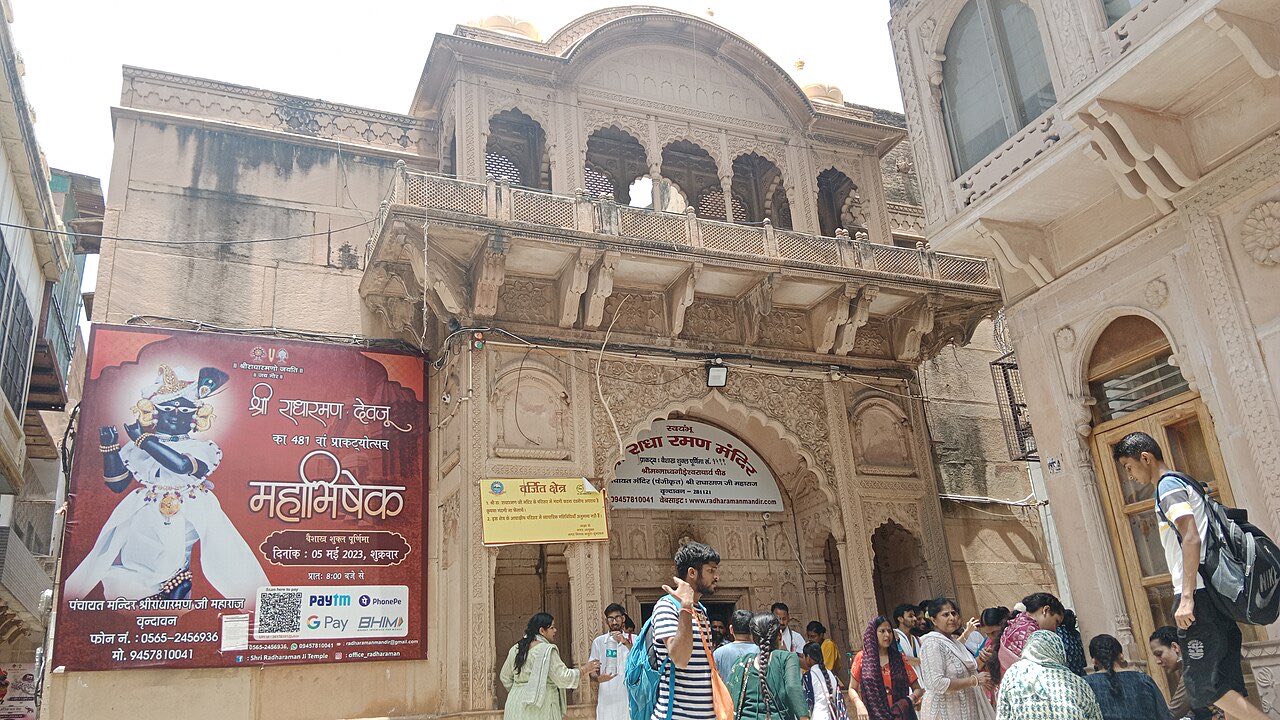
The temple gate on a festival day — photo by Kridha20, CC BY-SA 4.0, via Wikimedia Commons
- Town
- Vrindavan
- Deity
- Radha Raman (self-manifested Krishna from a shaligram shila)
- Origins
- Deity manifested 1542; served continuously by descendants of Gopala Bhatta Goswami
- Summer hours
- Roughly 8:00 am–12:30 pm and 6:00–8:00 pm
- Winter hours
- Roughly 8:00 am–12:30 pm and 5:30–7:30 pm
- Entry
- Free
- Dress code
- Modest and conservative — this is an orthodox Goswami temple. Shoulders and knees covered; a head-covering scarf is appreciated though not required.
- Photography
- Not permitted of the deity. Be discreet with phones throughout.
About the hours: A working shrine with a precise daily liturgy — hours flex around services and festivals; confirm locally.
Overview
Radha Raman is where those who know Vrindavan best tend to send those who want to understand it. There is no marble spectacle here and no surging crowd — just a modest courtyard shrine in the old quarter where one of India’s most precise living liturgies has run without interruption since 1542, tended by the direct descendants of its founding saint. The deity is barely thirty centimeters tall. The devotion around him is among the deepest in Braj.
History
Gopala Bhatta Goswami, one of the six Goswamis of Vrindavan dispatched by Chaitanya Mahaprabhu, worshipped twelve shaligram shilas — sacred stones from the Gandaki river of Nepal. In 1542, tradition records, one of them manifested as the image of Radha Raman. The temple grew around that event, and the families serving it today trace their line directly to Gopala Bhatta. The Goswami’s own seat and relics are preserved within the compound, and the temple’s cooking fire is said to have been kept alight since the sixteenth century — meals for the deity are still prepared on it, in the old way, every day.
Spiritual significance
For the Gaudiya tradition this is among the most sacred images in the world — not installed by human ceremony but self-manifested. The worship here is a masterclass in the tradition’s intimacy: Radha Raman is bathed, dressed, fed, rested, and serenaded on a precise daily schedule (the ashtakaliya seva, service through the eight periods of the day), and Radha is present as a crown beside him rather than an image — the temple’s name itself means “he who delights Radha.”
Visiting well
- Come for a service hour rather than between them — mid-morning shringar or evening sandhya aarti; ask at the gate, the families are used to sincere visitors.
- Dress conservatively and move quietly; this is an orthodox working shrine, not a monument.
- Give it time and stillness — twenty unhurried minutes here often outweigh two hours elsewhere.
- Pair with the neighboring Radha Vallabh temple for a morning inside Vrindavan’s old devotional core.
Festivals here
Janmashtami at Radha Raman includes a famous abhisheka (ceremonial bathing) of the deity; Jhulan Yatra brings exquisite swing decorations in the courtyard; and the temple’s appearance day (the manifestation anniversary, in the spring) is its own intimate festival, when the deity’s original shaligram form is honored.
While you're here
Around the temple
Nearby attractions
- Radha Vallabh and Radha Gokulananda temples
- The dense old-Vrindavan temple quarter — three of the tradition's great shrines within five minutes of each other.
- Nidhivan
- The sacred grove is a short walk through the lanes.
Eating & staying nearby
- Old-quarter halwais
- The surrounding lanes hold quiet, generations-old sweet and snack shops far less hectic than the Banke Bihari bazaar.
- Where to stay
- Guesthouses in this quarter are simple and steeped in the old town's rhythm; several ashrams nearby take respectful international guests. See the accommodation guide.
Festivals celebrated here:
Questions
Asked often.
- What does "self-manifested" mean at Radha Raman?
- Tradition holds that in 1542 the deity emerged spontaneously from one of Gopala Bhatta Goswami's shaligram shilas (sacred stones) — not carved by any human hand. The 30-cm image has been worshipped without a single day's interruption since.
- Why is there no Radha image beside the deity?
- Radha is represented by a crown placed beside Radha Raman rather than a separate image — a subtlety of this tradition; the name itself means "one who delights Radha."
- Is Radha Raman worth visiting if I only have one day?
- Yes — precisely because it is everything Banke Bihari is not: small, quiet, exacting, and profound. The pairing of the two in one morning is the best short course in Vrindavan that exists.
Visiting?
Planning a trip around Vrindavan?
Hourly, independent trip-planning help from a local — itineraries, bookings in your name, no commissions. The introduction is free.
amit@brajbhoomi.com