Temple · Vrindavan
Jugal Kishore Mandir (Kesi Ghat)
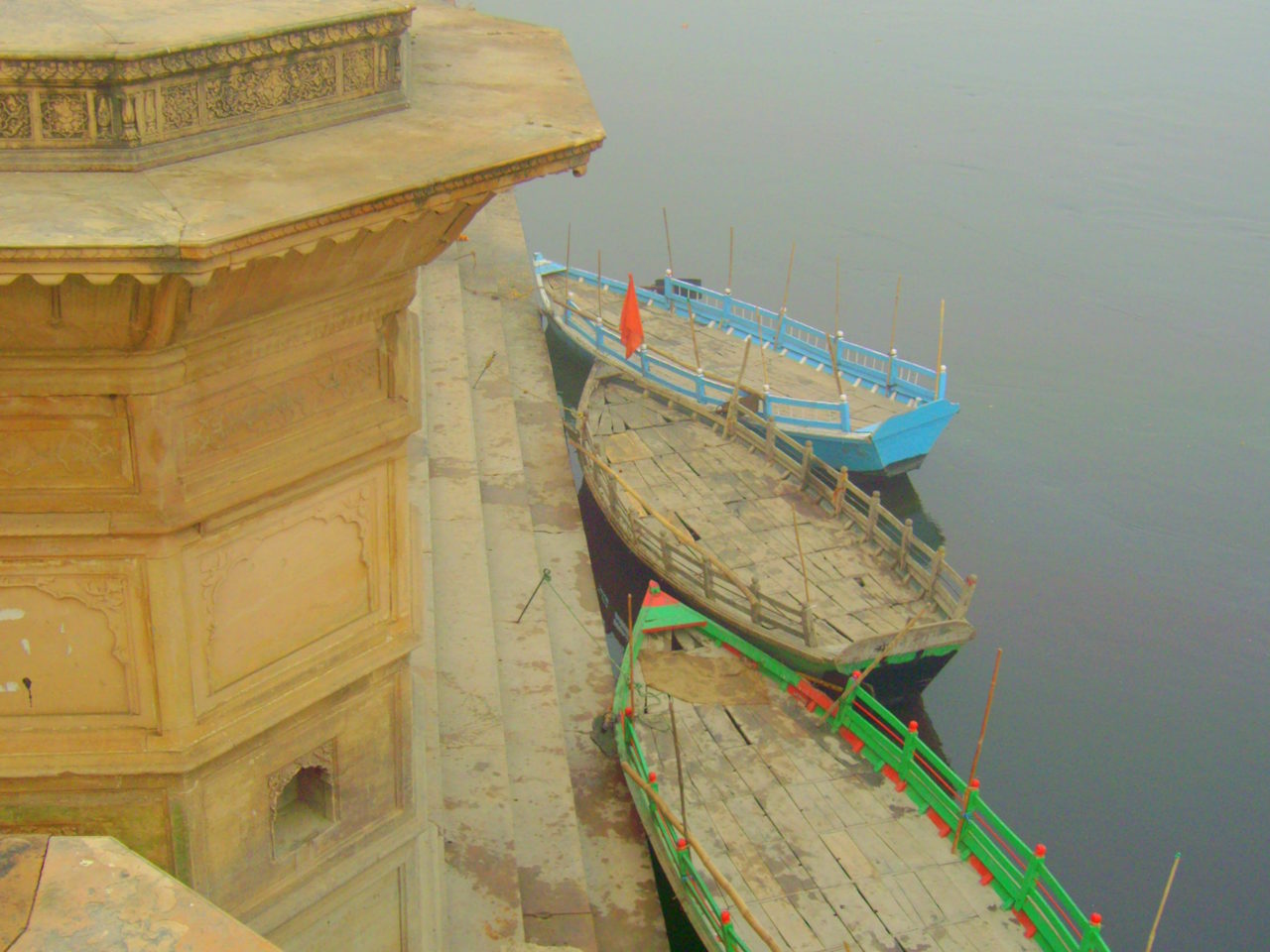
The 1627 sandstone survivor above Kesi Ghat — old Vrindavan's riverfront, temple and ghat in one frame.
Boats below the ghat's sandstone bastions — photo by Atarax42, CC BY-SA 3.0, via Wikimedia Commons (cropped)
- Town
- Vrindavan
- Deity
- Jugal Kishore (the youthful divine pair, Radha and Krishna)
- Origins
- Temple completed 1627 under Jahangir's reign; the ghat's great riverfront raised by Bharatpur patronage in the early 19th century
- Summer hours
- Roughly 6:00 am–12:00 pm and 4:30–8:30 pm
- Winter hours
- Roughly 6:30 am–12:00 pm and 4:00–8:00 pm
- Entry
- Free
- Dress code
- Modest — shoulders and knees covered. Expect wet stone steps near the water.
- Photography
- The ghat is among the most photographed places in Braj — sunrise and aarti especially. Be considerate of bathers and avoid the shrine images.
About the hours: The old temple is part monument and keeps loose hours; the ghat itself is open always, with Yamuna aarti at sunset.
Overview
Vrindavan meets its river at Kesi Ghat, and the meeting is the most beautiful thing in town: a long sandstone riverfront of bastions, kiosks, and steps with the red tower of Jugal Kishore — the town’s fourth great sixteenth-and- seventeenth-century temple — rising behind it. Morning bathers, evening lamps, boats resting on slack water: whatever postcard of old Vrindavan lives in your head, it was probably taken here.
History
The temple came first: completed in 1627, late in Jahangir’s reign, Jugal Kishore closed the great century of sandstone building that gave Vrindavan Madan Mohan, Govind Dev, and Gopinath. Like its elders it was stripped of its deity in the Aurangzeb years and stands today part monument, part shrine. The ghat’s grand riverfront is younger — early nineteenth century, raised by the Bharatpur court’s patronage — built over the ancient bathing place where tradition says Krishna washed after slaying the horse demon Keshi.
Spiritual significance
The ghat outranks the temple in daily practice. Bathing where Krishna bathed after the Keshi fight is held to concentrate the merit of every sacred ford into one dip, and the spot anchors the riverside leg of the Vrindavan parikrama. The evening Yamuna aarti honors the river herself — in Braj theology Yamuna is not water but a goddess, Krishna’s own consort-companion — and the nightly lamps are the town’s standing thank-you to her.
Visiting well
- Come at dawn — bathers, birdsong, gold light on sandstone — or for the sunset aarti; midday is flat by comparison.
- Take a rowboat for twenty minutes: the riverfront was designed to be seen from the water, and the boatmen know it.
- Walk the parikrama stretch along the river in either direction; it is the gentlest introduction to the circumambulation path.
- The steps are worn and slick at the waterline — mind your footing, and keep phones zipped near the monkeys.
Festivals here
Kartik is the ghat’s month: lamp offerings float on the river nightly, and the parikrama traffic swells from before dawn. Janmashtami and Yamuna Chhath bring ritual bathing crowds, and on big nights the whole riverfront becomes a single field of small flames.
While you're here
Around Jugal Kishore Mandir (Kesi Ghat)
Nearby attractions
- The Yamuna parikrama path
- The riverside stretch of the Vrindavan parikrama passes along the ghat — walk a stretch of it at dawn.
- Boat rides on the Yamuna
- Rowboats work the ghat through the day; the view of the sandstone riverfront from the water is the classic one.
Eating & staying nearby
- Ghat-side tea stalls
- Chai and snacks serve the morning bathers; proper meals are back up in the bazaar lanes.
- Where to stay
- A handful of riverside guesthouses overlook the ghat — simple rooms with the best views in Vrindavan; book ahead for Kartik. See the accommodation guide.
Festivals celebrated here:
Questions
Asked often.
- What happened at Kesi Ghat in Krishna's story?
- Here Krishna slew Keshi, the horse demon sent to kill him, and bathed in the Yamuna afterward — which made the ghat a bathing place of special power. A dip here is held to carry the merit of bathing at all the sacred fords together.
- How old is the Jugal Kishore temple?
- Completed in 1627, in the last wave of Vrindavan's great sandstone temples before Aurangzeb's era ended such building. It is counted with Madan Mohan, Govind Dev, and Gopinath among the four oldest temples of the town.
- Is there an aarti at the ghat?
- Yes — Yamuna aarti at sunset each evening, lamps offered to the river itself. It is smaller and gentler than the Ganga aartis of Varanasi or Rishikesh, and lovelier for it.
Visiting?
Planning a trip around Vrindavan?
Hourly, independent trip-planning help from a local — itineraries, bookings in your name, no commissions. The introduction is free.
amit@brajbhoomi.com