Temple · Govardhan
Daan Ghati Mandir
Where the sacred hill meets the road — the shrine every Govardhan parikrama passes, and most begin.
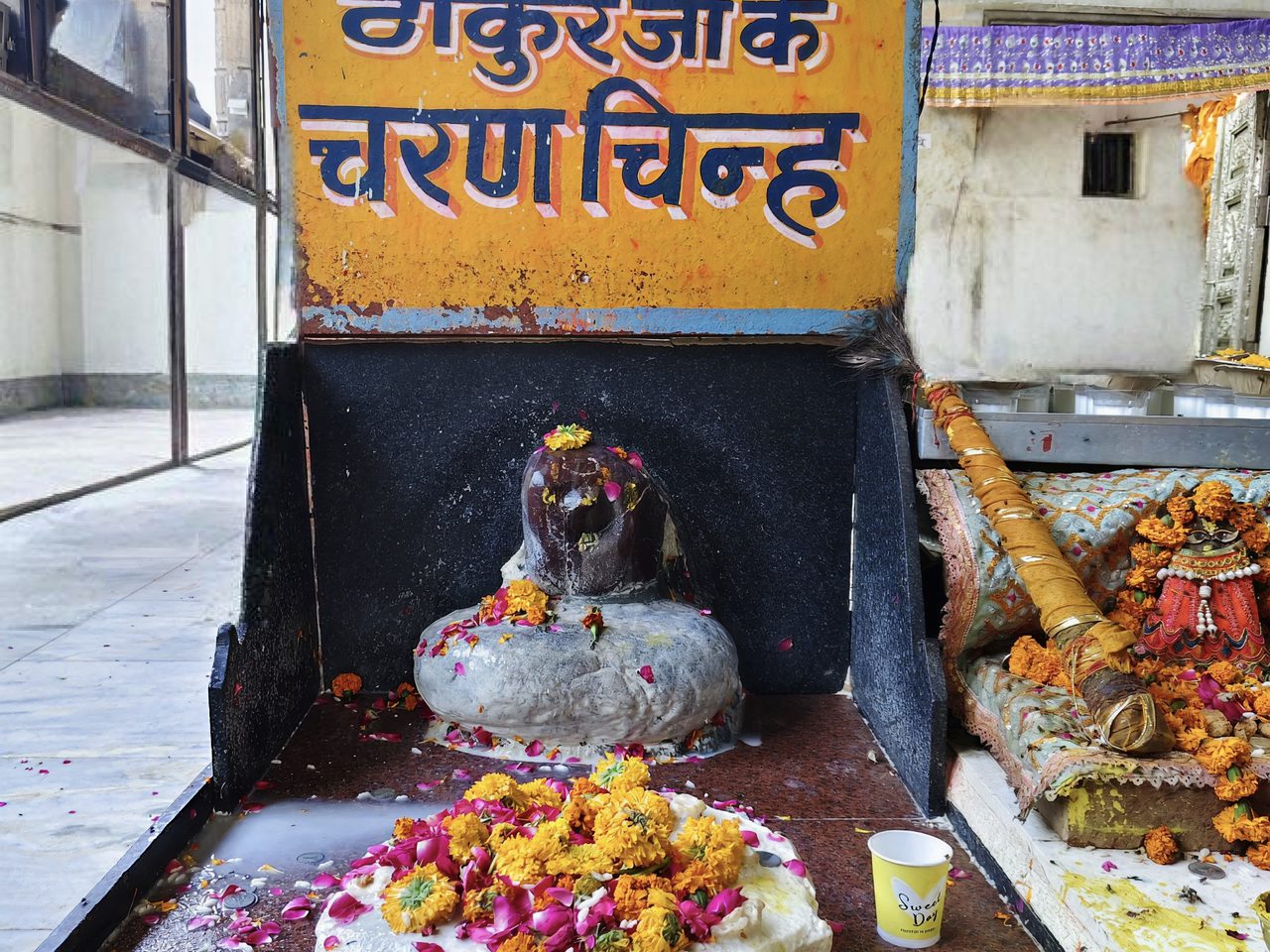
The shila at Daan Ghati, heaped with offerings — photo by Aliva Sahoo, CC BY-SA 3.0, via Wikimedia Commons (cropped)
- Town
- Govardhan
- Deity
- Giriraj (Govardhan hill itself, worshipped in stone)
- Origins
- The shila is the hill itself — worshipped here for as long as the parikrama has existed; the present shrine structure is recent
- Summer hours
- Roughly 4:30 am–11:00 pm
- Winter hours
- Roughly 5:00 am–10:30 pm
- Entry
- Free
- Dress code
- Modest and practical — most visitors are mid-parikrama. Bare feet are the norm on the path; the shrine area is no different.
- Photography
- Tolerated around the shrine and the busy road; be considerate of pilgrims making offerings at the shila.
About the hours: Effectively open with the parikrama itself — dawn to late night, and around the clock on big festival days.
Overview
Govardhan has no single great temple because the hill itself is the deity — and Daan Ghati is where that fact meets the road. At the pass where the Mathura–Deeg highway crosses the sacred ridge, a dark Giriraj shila sits below street level under a painted canopy, heaped with flowers, milk, and butter from before dawn until late night. Nearly every one of the millions who walk the 21-kilometer parikrama each year begins, ends, or bows here.
History
The shrine marks the dan lila — Krishna the toll-collector, stopping the gopis on this pass to demand his tax of butter and curd. The spot has been honored for as long as the parikrama has existed; the structure around it is modern and beside the point. The most telling detail is vertical: centuries of road-building have raised the highway while the shila stayed put, so pilgrims now step down to touch the hill — the landscape’s own record of how long worship has continued here.
Spiritual significance
In Braj theology, Govardhan is not a symbol of Krishna — it is Krishna, the hill he lifted for seven days to shelter the herders from Indra’s rains. Every stone of it is sacred, which is why parikrama pilgrims walk barefoot and why nothing is ever taken from the hill. Daan Ghati concentrates all of that into one touchable point at the town’s center: the accessible face of a deity twenty-one kilometers around.
Visiting well
- Start the parikrama here if you’re walking it — dawn is traditional, and the first kilometers through town pass Manasi Ganga while the day is still cool.
- Not walking? Come anyway: the shrine takes minutes, and watching the parikrama stream past at first light is one of the sights of Braj.
- Offer milk or butter rather than grander things; the dan lila sets the menu.
- Big days — Purnima, Ekadashi, and above all Govardhan Puja and the Mudiya Purnima fair in July — are overwhelming; go very early or choose a quieter day.
Festivals here
Govardhan Puja, the day after Diwali, is the shrine’s summit: the annakut mountain of food, and crowds beyond counting. Through Kartik the parikrama runs day and night, and at Mudiya Purnima in July the town hosts one of the largest religious gatherings in north India — millions circling the hill in a few days, all of them passing this door.
While you're here
Around the temple
Nearby attractions
- Manasi Ganga
- Govardhan's sacred lake sits minutes away at the heart of town, ringed with ghats and shrines.
- The parikrama path
- The 21-km circumambulation of the hill passes the temple door — Radha Kund and Kusum Sarovar lie along the northern arc.
Eating & staying nearby
- Parikrama dhabas and stalls
- The road through town runs on tea, kachori, and simple thalis at all hours — honest pilgrim food, nothing fancy.
- Where to stay
- Govardhan has basic dharamshalas and a few simple hotels; many visitors stay in Vrindavan or Mathura and come for the parikrama day. See the accommodation guide.
Festivals celebrated here:
Questions
Asked often.
- What does "Daan Ghati" mean?
- The pass of the toll. Here, tradition says, young Krishna waylaid the gopis carrying butter and curd over the hill and demanded his dan — his tax — in a game of holy extortion the poets never tired of. The shrine keeps the spot where the road crosses the hill.
- Why is the deity below road level?
- The shila — the rock that is Govardhan himself — has stayed where it always was while centuries of traffic raised the road above it. Pilgrims now step down to it, which every local will tell you is exactly as it should be: the hill does not rise to meet us.
- Do I have to do the full parikrama to visit?
- Not at all — the temple stands on the main road through Govardhan town and takes minutes to visit. But it is the traditional starting point, so if the 21 km is in you, this is where to begin and end it.
- What is offered here?
- Milk, butter, and sweets above all — the dan Krishna demanded. On Govardhan Puja the whole region cooks the annakut, the mountain of food, and the shila all but disappears under it.
Visiting?
Planning a trip around Govardhan?
Hourly, independent trip-planning help from a local — itineraries, bookings in your name, no commissions. The introduction is free.
amit@brajbhoomi.com