Route guide
Govardhan Parikrama
The 21-kilometer walk around the hill Krishna lifted — Braj's great devotional exercise, done right.
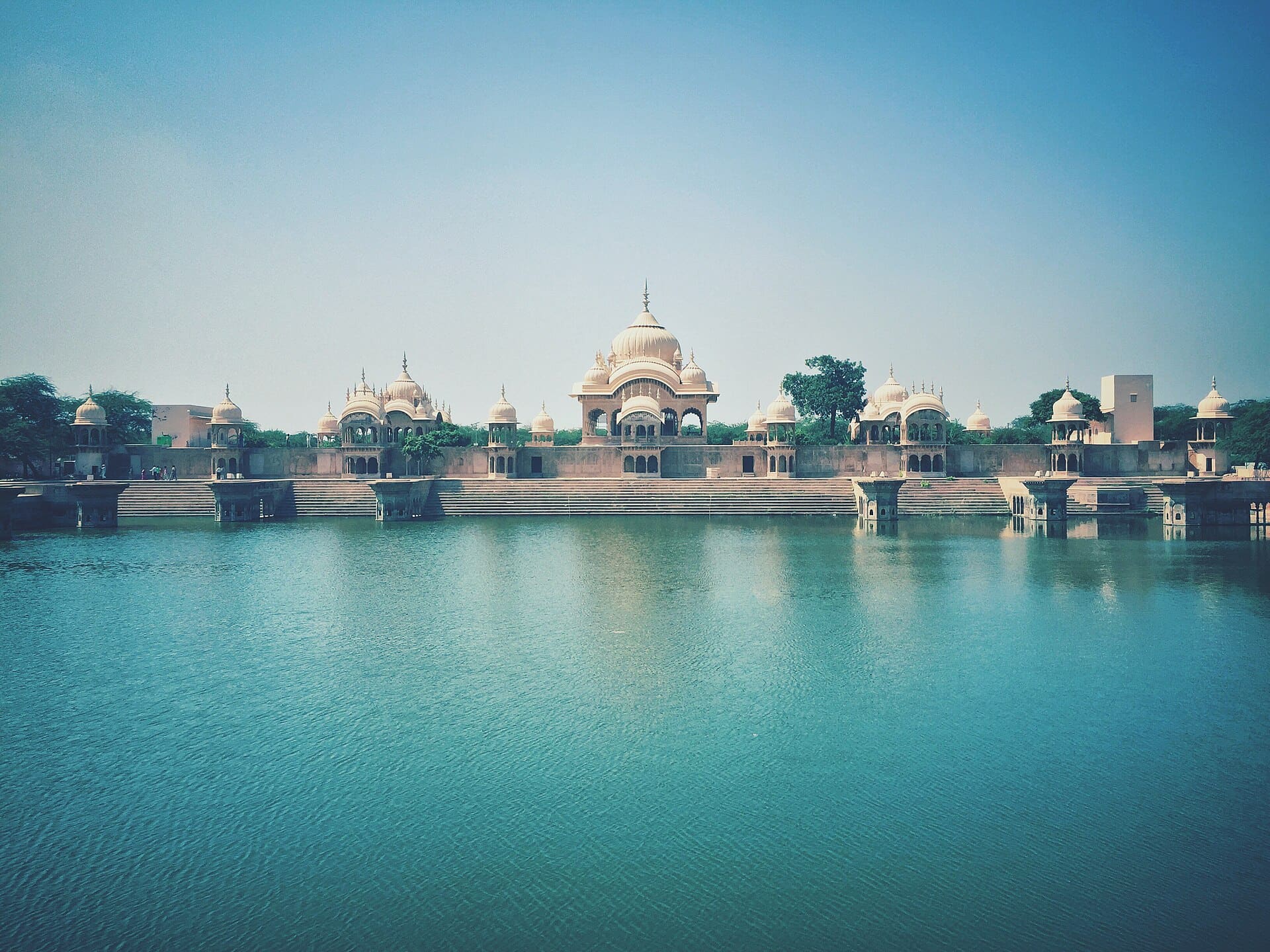
Kusum Sarovar, on the parikrama path — photo by Ekabhishek, CC BY-SA 4.0, via Wikimedia Commons
- Distance
- ~21 km full circuit
- Time on foot
- 5–7 hours at pilgrim pace
- Start point
- Traditionally Mansi Ganga / Danghati, Govardhan town
- From Vrindavan
- ~25 km, 45 min by car
What it is
The Govardhan parikrama is a 21 km circuit on foot around Govardhan hill — 5 to 7 hours at pilgrim pace, traditionally starting at Mansi Ganga and the Danghati temple in Govardhan town and walked clockwise. Govardhan itself is about 25 km from Vrindavan, 45 minutes by car.
Govardhan is the hill Krishna lifted on one finger to shelter Braj from Indra’s deluge — and, for the tradition, the hill is Krishna, not a monument to him. Walking around it (never climbing it — the hill is not stood upon) is Braj’s central devotional act: the parikrama, 21 kilometers of dusty, song-filled, chai-punctuated circumambulation that anyone with legs and a morning can join.
The route
The circuit loops the long low ridge through Govardhan town, Radha Kund, and open Braj countryside. Traditional starting point is Mansi Ganga tank and the Danghati temple in Govardhan town; the direction is clockwise (hill always on your right).
Key stops, in walking order from Danghati:
- Mansi Ganga — the sacred tank at the center of town, the classic pre-dawn start.
- Mukharvind — where the hill’s “face” is worshipped directly with milk offerings.
- Radha Kund and Shyam Kund — the paired ponds counted as the holiest waters in Braj devotion; the emotional midpoint. Under a kilometer of their own parikrama if you add it.
- Kusum Sarovar — the sandstone ghats and cenotaphs beside the route, the most beautiful built stop on the circuit and the right place for a long rest.
- Govind Kund, Punchari — the far-side stretch, quieter, more rural, more like the Braj of a century ago.
Honest practicalities
- 5–7 hours at devotional pace with stops; brisk walkers do it in four and miss the point.
- Start at dawn — for cool stone (essential if barefoot), soft light at Kusum Sarovar, and lunch back in town.
- Shoes vs barefoot: your choice; blistered soles teach nothing sacred. Broken-in sandals and electrolytes are the packing list answer.
- The path is flat, unpaved in stretches, shadeless for kilometers — hat, water, sunscreen from October to March; think hard before attempting it April–June at all.
- Bhandaras and stalls feed the route; carrying small notes lets you drink chai like a pilgrim instead of budgeting like a tourist.
- On Govardhan Puja and Purnima days the circuit becomes a human river — join deliberately or avoid deliberately.
- Getting there: ~45 minutes by car from Vrindavan; drivers wait at agreed points or meet you across the circuit — arrange the day plan before you start walking.
Questions
Asked often.
- How long is the Govardhan parikrama?
- About 21 km for the full circuit — 5 to 7 hours on foot at pilgrim pace with stops. Brisk walkers finish in four and miss the point. Adding the Radha Kund parikrama puts under another kilometre on top.
- Where does the Govardhan parikrama start?
- Traditionally at Mansi Ganga tank and the Danghati temple in Govardhan town, walked clockwise with the hill always on your right. Those doing only part of the circuit often start at Radha Kund instead.
- How far is Govardhan from Vrindavan?
- About 25 km — roughly 45 minutes by car. Most people come out for the day, walk the circuit from dawn, and return in the afternoon; drivers wait at agreed points around the route.
- Do I have to walk the Govardhan parikrama barefoot?
- No — barefoot is the traditional observance and many pilgrims keep it, but shoes are common and nobody polices visitors' feet. If you go barefoot, start at dawn before the stone heats and accept a slow pace.
- Can the parikrama be done partially or by vehicle?
- Yes. Many visitors walk the Radha Kund segment or the town-and-Mansi-Ganga stretch only. Auto-rickshaws cover the outer road for those who cannot walk it — less merit by tradition, same landscape.
- Is there food and water along the route?
- Constantly — the path is lined with stalls, bhandaras (free food distributions), and chai stops, denser near the towns and thinner on the far side. Carry a bottle anyway, and small notes.
Want it arranged?
Rather have a local set this up?
Drivers vouched for, trains booked in your name, plans that match the season — hourly and commission-free. The introduction costs nothing.
amit@brajbhoomi.com